Tell the story.
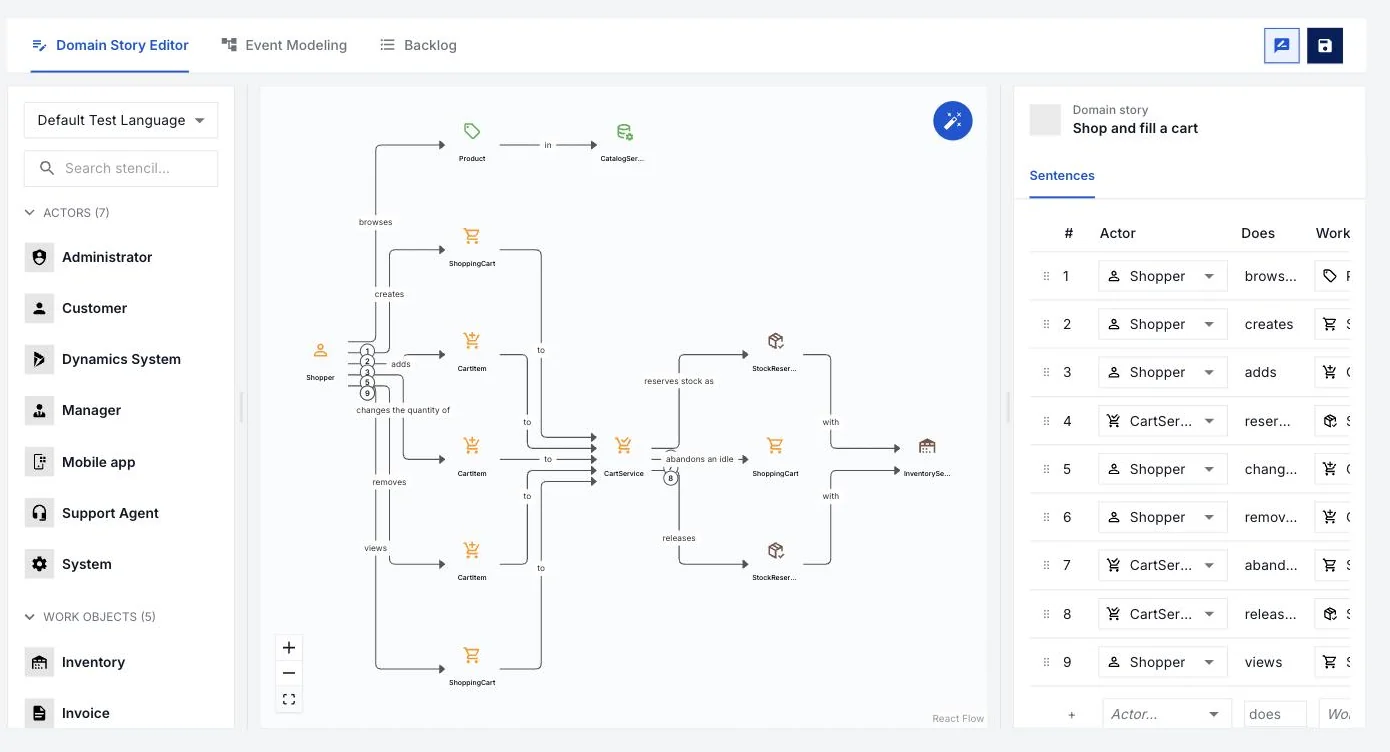
Model the business process as numbered sentences on a canvas (who does what, with what), using the icons of your own domain language. Product owners tell it in their words.
The first AI-native software delivery system
M1Spec takes you from the business conversation to a merged pull request. Domain stories, event models, API contracts, backlog, tests and architecture. All connected, all AI-native, all in one place.
M1Spec is not another AI tool to add to the pile. It is one system that runs delivery end to end, from the first conversation with the business to the pull request that ships it, with AI built into every step, not bolted on.
The problem
Between what the business means and the code that ships, intent gets translated by hand at every step: requirements, architecture, API, tickets, code. Then we add an AI tool to each step, and each one sees only its own fragment.
McKinsey survey of product and engineering leaders, as cited in our research.
Don’t make the fragments faster. Connect them.
How it works
Each step is generated from the one before it, so nothing is typed twice and nothing drifts.
Model the business process as numbered sentences on a canvas (who does what, with what), using the icons of your own domain language. Product owners tell it in their words.
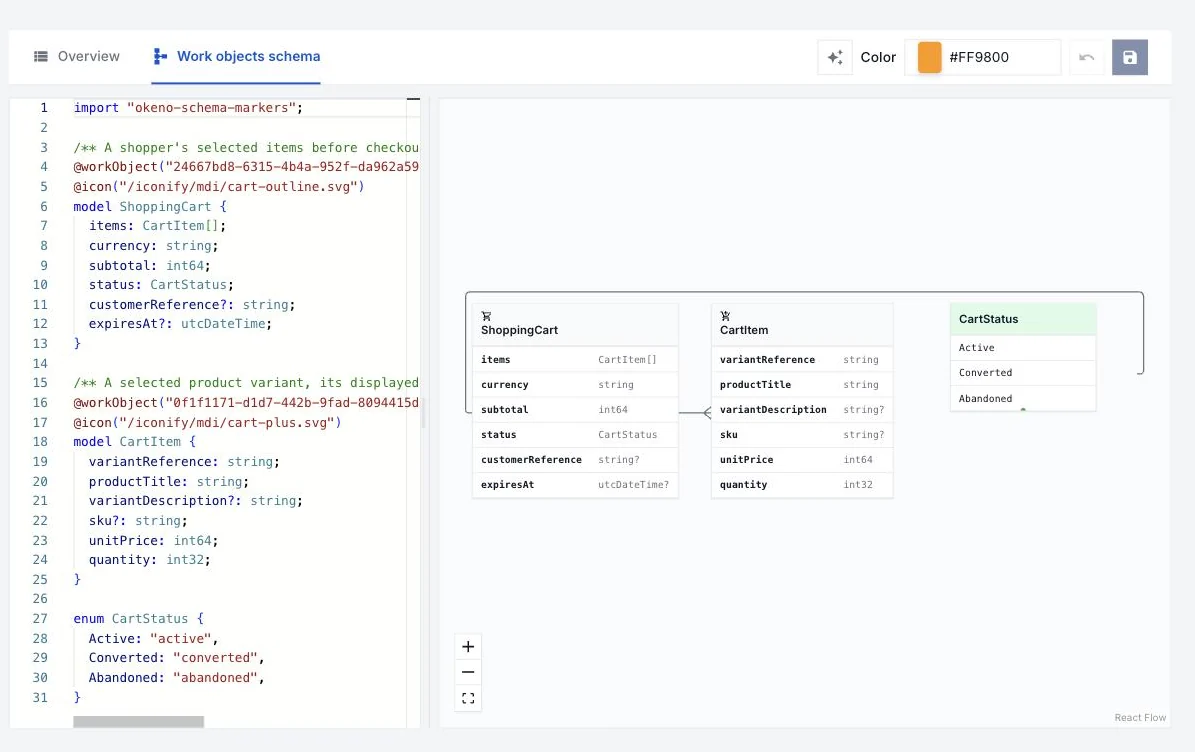
Every bounded context gets a shared vocabulary: work objects, actors, commands, events and policies. Work objects carry a TypeSpec schema with a live ER diagram. Rename once, and every story, schema and system follows.
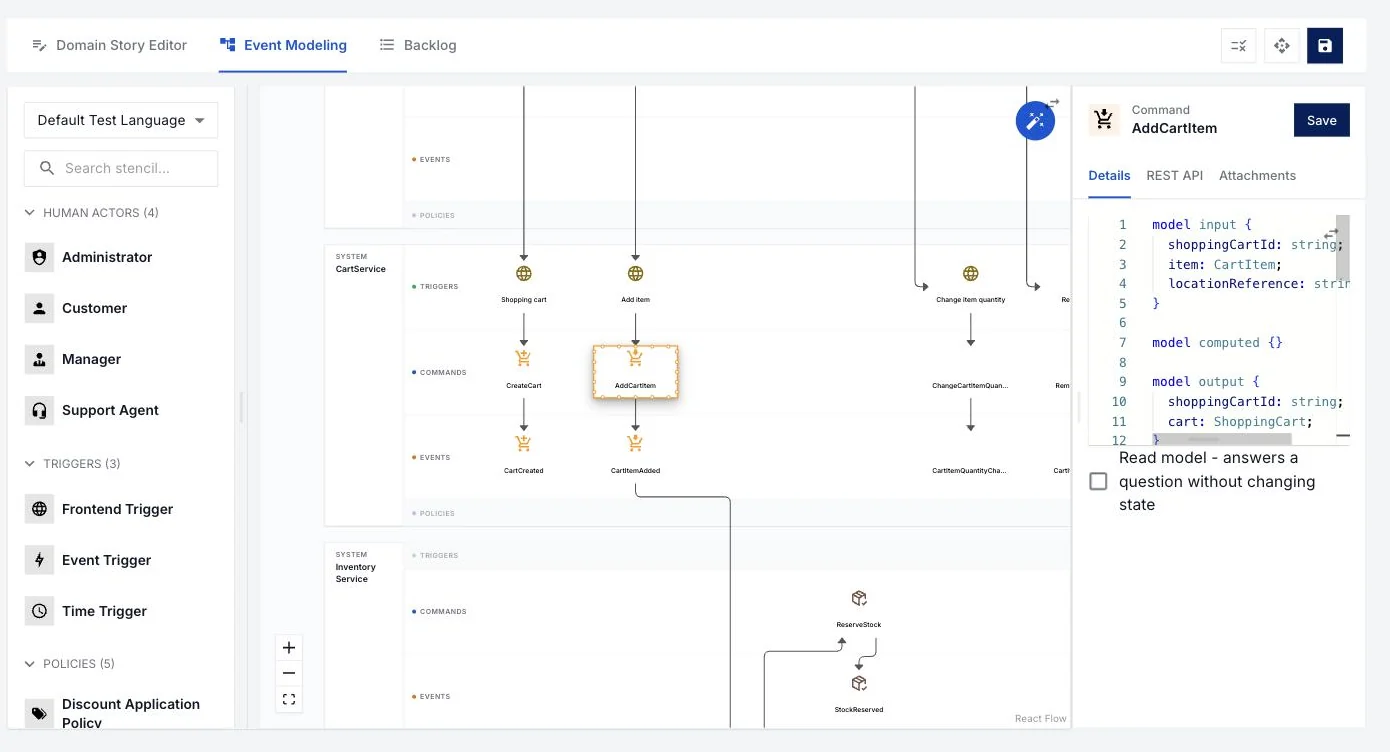
AI turns the story into an event model on a timeline board: one band per system, with triggers, commands, events and policies in their lanes. Correctness rules run on every save.
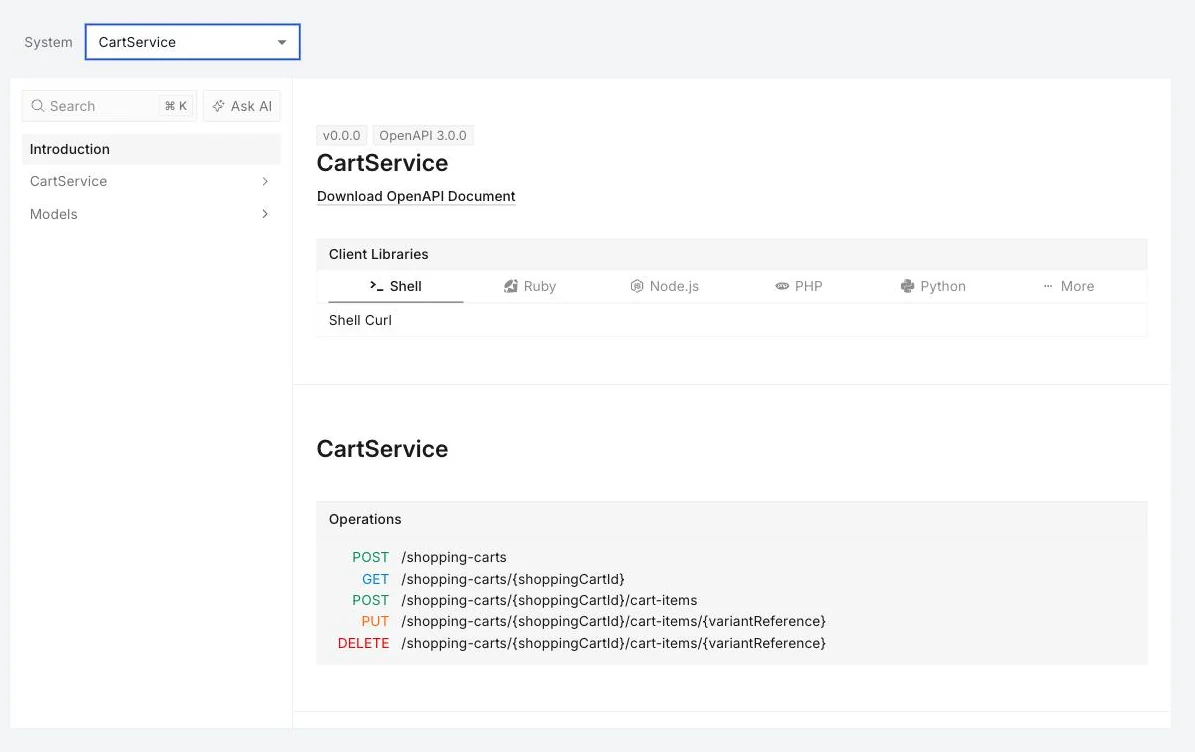
An OpenAPI contract per system, derived from the event model. Browse it, try it, download it. Commands a screen starts are exposed as REST, and a choice you make stays made.
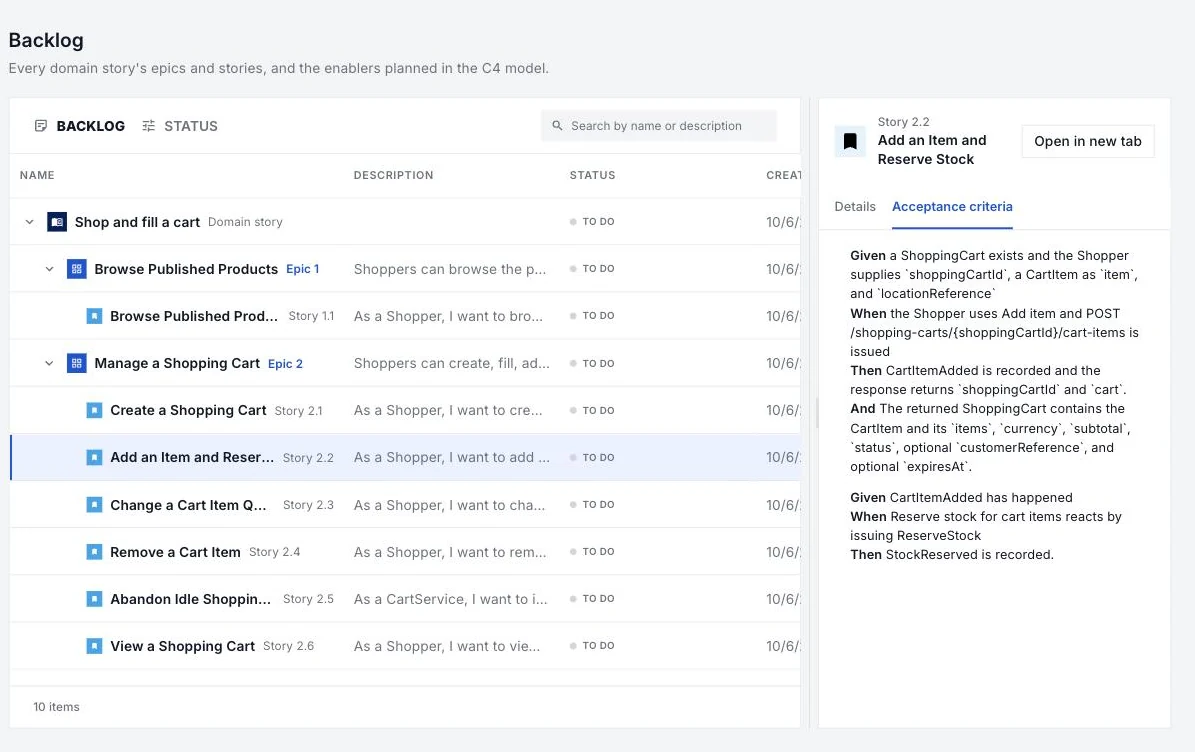
Epics and stories for every domain story in one hierarchy, with Given / When / Then acceptance criteria that name the real endpoints and events.
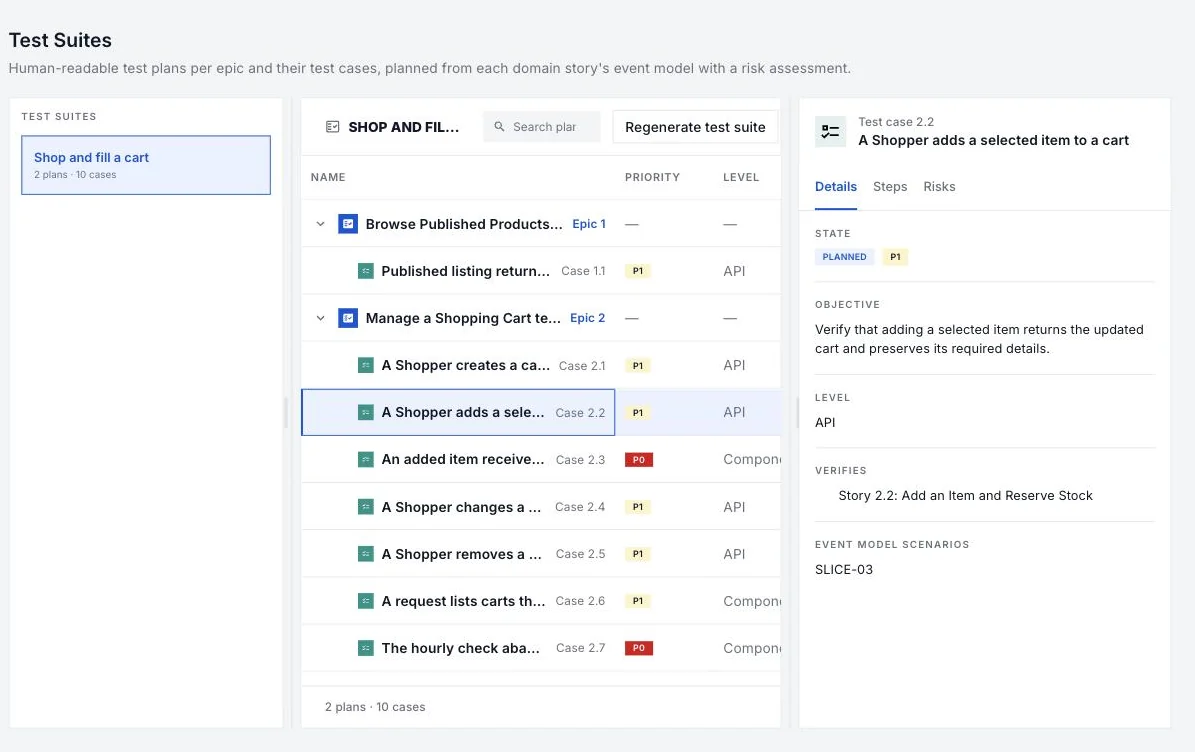
Human-readable test suites, plans and cases (steps, preconditions, risks and priority), generated from the event model before a line of code exists.
One system, three workspaces
The agent
Approve a plan and M1Spec hands it to a desktop agent on your own machine. The agent drives your coding assistant (Claude Code or GitHub Copilot CLI) task by task, with your architecture, technologies, patterns and specs on demand.
Executing
1.1 Browse Published Products
0 of 7 tasks done
Pull request opened
A replay of a real execution from our own test project.
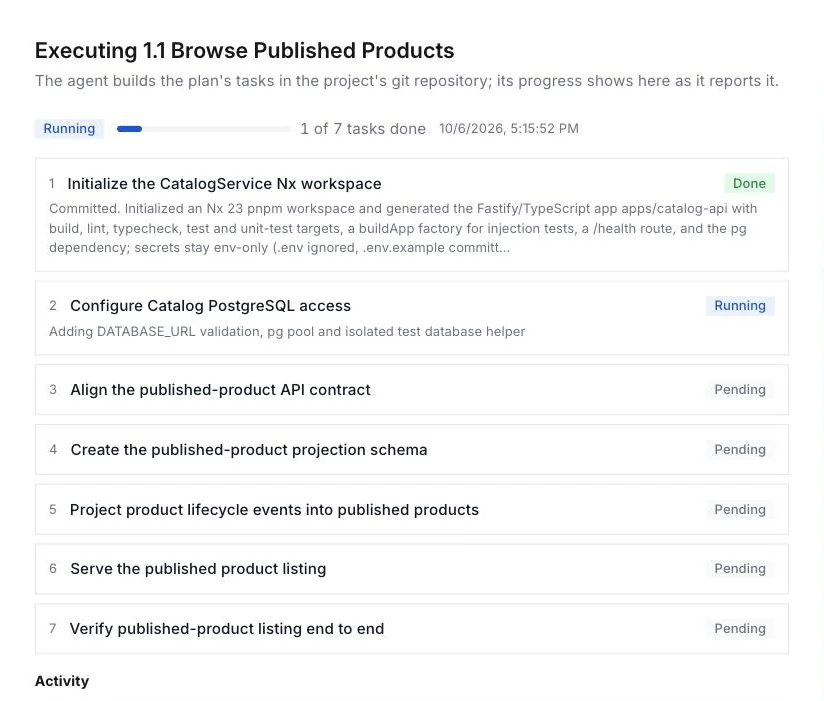
The agent works in your repository, with your git and your coding assistant, on your machine.
Secrets stay in the operating system's keychain. The agent keeps only a per-project connection string you can regenerate at any time.
The agent takes no work until you switch it online.
You stay in control
Before any code is written, M1Spec asks one question: could a developer build this on the architecture as recorded? If not, it stops and shows you exactly what is missing. Your answers are recorded as decisions, and the AI treats them as settled.
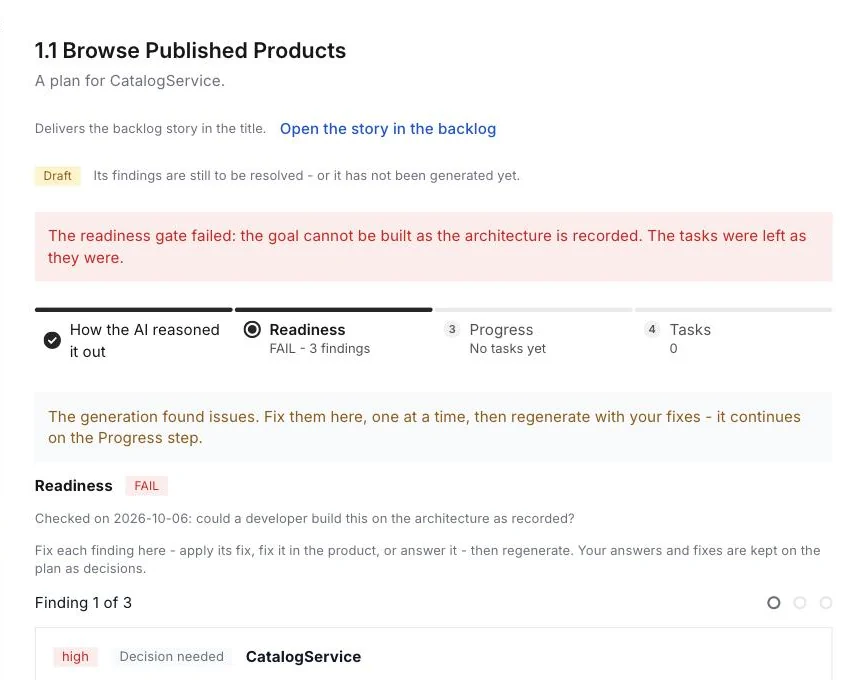
A choice you made explicitly stays made. It is recorded, enforced by validation and restored if an AI step tries to change it.
A command only reaches events of its own system. A command a screen starts is exposed as REST. The same rules run on save, generation, import and in the open spec validator.
The event model describes what the business does. Your patterns and your codebase decide how the code is shaped: the agent never invents classes your patterns don't have.
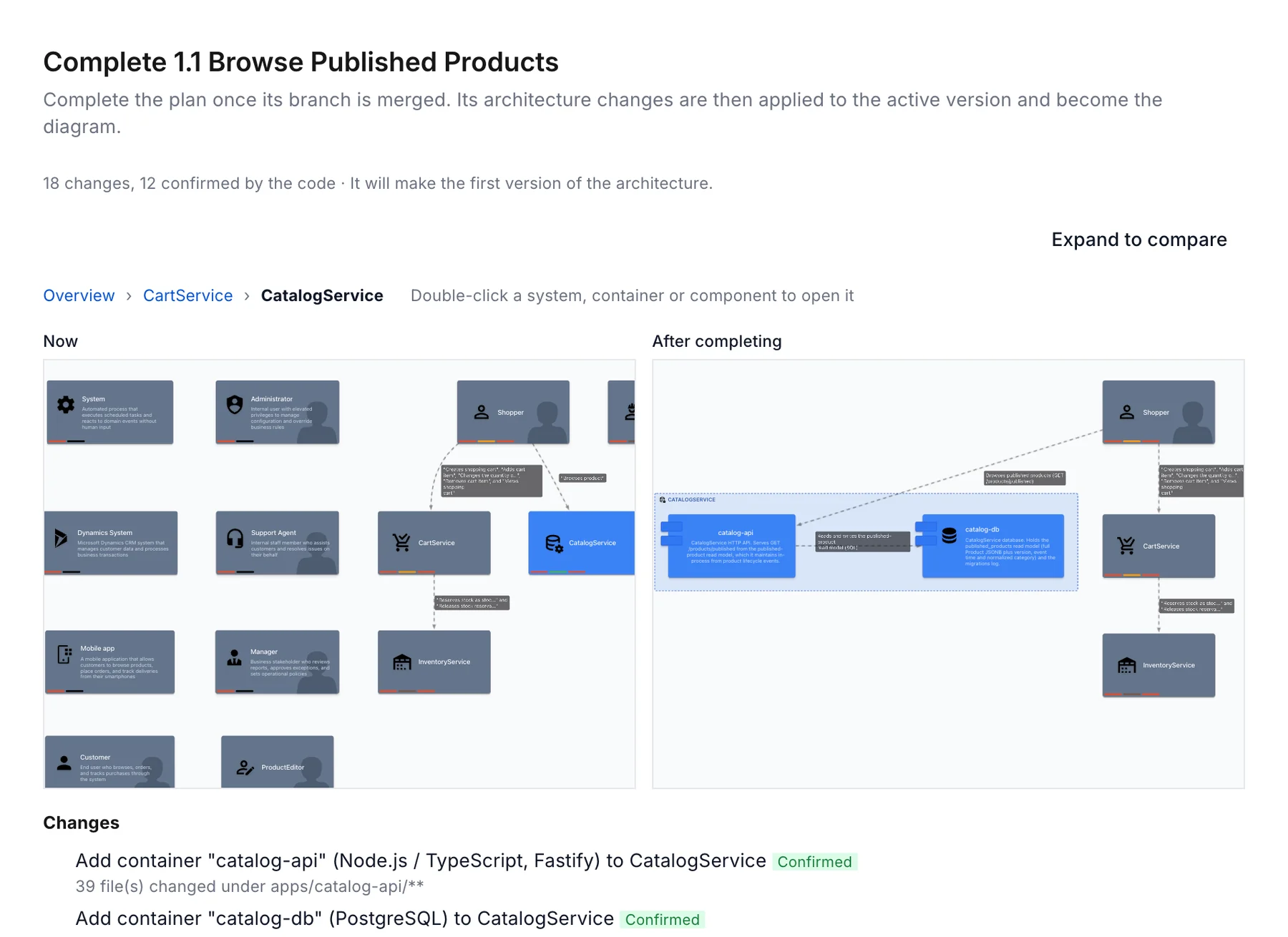
The architecture changes only when the code is merged and you complete the plan. Not a moment before.
Architecture that stays true
Every execution reports a C4 change set of what was actually built, with evidence for each change. Compare now and after, then complete the plan to make it the active version.
Start from templates
Begin with ready-made domain languages and domain stories (Payment, Pay for order, Shop and fill a cart) from the open OpenBusinessSpec repository. Story templates declare their dependencies, and every import is checked against the same correctness rules as a save.
Browse OpenBusinessSpec@rest(Post, "/payments")
@command("c71e54e6-9bc2-4650-809d-a2ec8774166f")
@icon("/iconify/mdi/credit-card-plus-outline.svg")
model CreatePayment {
input: {
order: OrderReference;
amount: Money;
};
output: {
payment: Payment;
};
}Who it's for
One AI platform to adopt, govern and measure, instead of a dozen tools to integrate and secure.
A C4 model that reflects the code, and a pattern language and technology catalog the agent actually uses.
Domain stories in their own words. Every backlog item and test traces back to a sentence they told.
A sliced backlog, a contract-first API, test cases before code, and pull requests that arrive ready to review.

M1Spec is opening to teams in waves. Join the waiting list and we'll let you know when your spot is ready.